What keeps an event team going when the pressure builds…
This article is for those who plan, lead, and orchestrate meaningful events and who know that success also depends on what no one ever sees.
When do you know an event is truly in good hands?
Not when everything is going smoothly.
But in the minutes just before doors open.
When the pressure builds and every detail matters.
It’s a moment the audience never sees, yet it reveals everything.
Event production is a craft of absolute precision
Safety, timing, coordination, outcome, nothing is left to chance.
This industry is often associated with spectacle.
Less is said about the discipline that makes it possible.
Because before emotion, there is precision.
Before doors open, there is pressure.
And behind that level of expectation lies a simple truth: the teams who make these moments happen are human, committed, and very much alive.
It is in this balance, between rigor and lightness, that the true quality of an event is shaped.
The moment no one ever sees
In event production, there is a suspended moment.
The one just before doors open.
Everything is ready.
Or rather: everything must be ready.
Adjustments are done.
Final checks follow one another.
Everyone knows their role.
Timing is no longer an intention, it’s a starting line.
Behind the doors, guests are waiting.
And in that moment, there is no room for approximation.
A profession where seriousness is a responsibility
In this field, being serious is not an image.
It’s a responsibility.
Safety.
Reliability.
Coordination.
Anticipation.
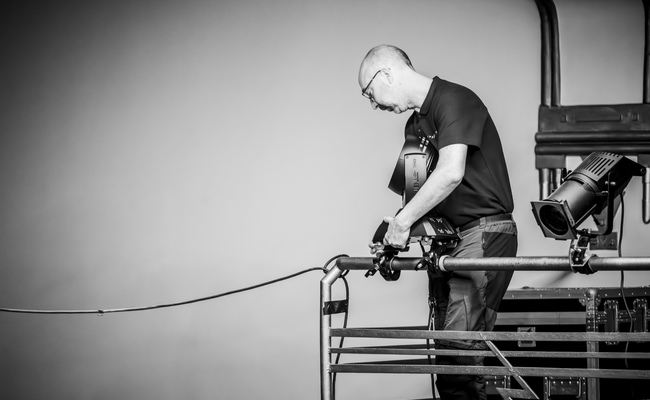
A poorly placed cable can become a risk.
A delay of just a few minutes can weaken the entire experience.
A forgotten detail can distract from an important message.
Expertise serves one purpose: ensuring the expected outcome, without visible friction.
Because once the event begins, it’s already too late to fix anything.
The invisible pressure
What’s less visible is the human intensity behind that precision.
Long days.
Irregular hours.
Unexpected changes.
Physical fatigue.
Fast decisions.
Event production demands sustained focus, where coordination, high standards, and emotional management constantly intertwine.
That’s exactly why team atmosphere is far more than a detail.
It’s a performance driver.
Humor as a professional skill
There’s a paradox in this industry: the higher the expectations, the more necessary lightness becomes.
A joke during setup.
An absurd moment just before opening.
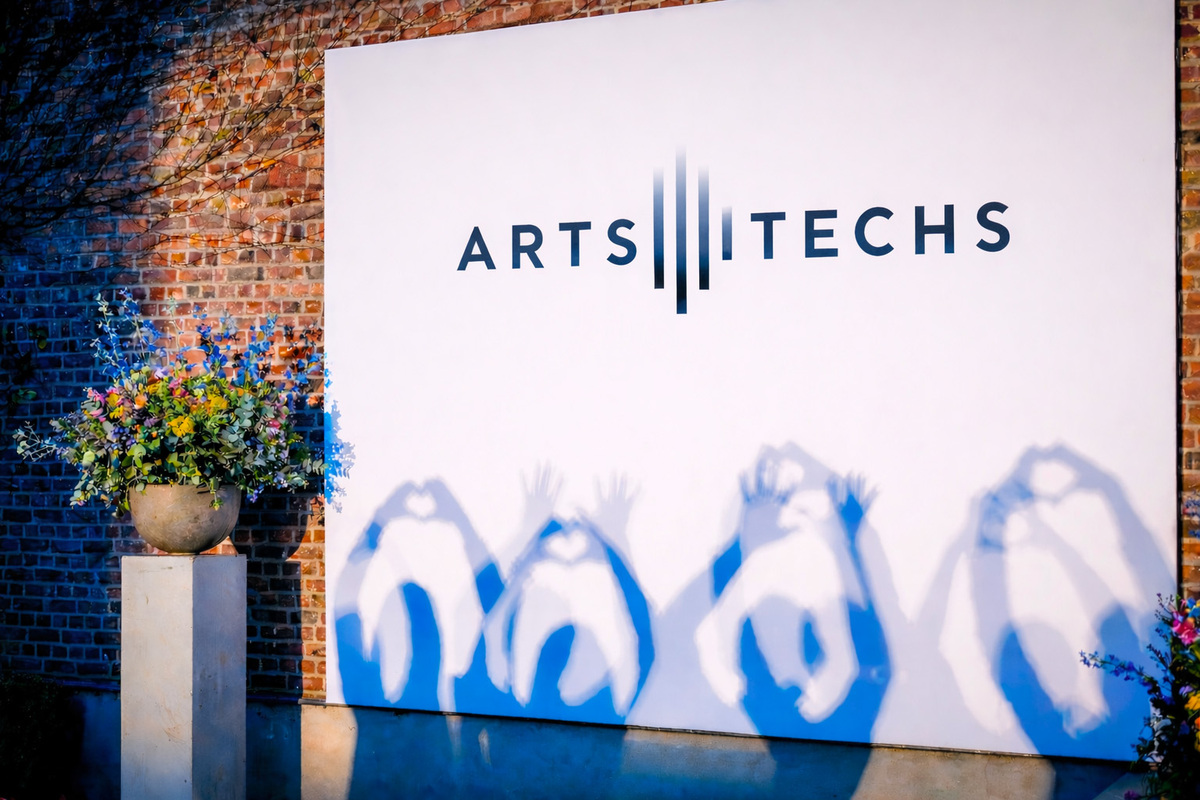
A spontaneous shadow play on a wall.
These micro-breaks are not secondary.
They release tension, maintain clarity, and sustain collective energy.
Humor builds trust.
Trust creates flow.
And flow strengthens execution.
Humor is, in every sense, part of professionalism.
Serious teams that don’t take themselves too seriously
The best event teams often share this trait: they know when to be extremely rigorous… and when to let go.
Because precision doesn’t require rigidity.
Because sustainable performance depends on people.
Because an overly tense environment will always weaken execution.
Creating a demanding framework while maintaining a light atmosphere, that’s the balance.
What this changes, in practice
You feel this balance immediately.
A team that is focused yet approachable.
Professional yet alive.
Structured without being cold.
It results in:
- clearer communication
- faster decisions
- less shared stress
- greater adaptability
- a smoother overall experience
And often, it shows up in unexpected moments: a smile, a shared glance, a gesture anticipated without a word.
Precision in service of what’s alive
Event production is a craft of precision.
But it remains deeply human.
We create spaces where messages can land.
Where connections can happen.
Where emotions can move.
It would be paradoxical to build all of that in a lifeless atmosphere.
Precision ensures everything works.
Lightness reminds us why we do it.
And sometimes, just before doors open, a few shadows on a wall are enough to bring that back into focus. (see accompanying photo)
Written by Julie Verstappen, event organiser for over 20 years.
After years of designing and coordinating a wide range of projects, from adaptive sports to the training and education sector, I came to understand that success is not driven solely by technical or logistical precision. It is built on a more discreet balance: clear objectives, a solid organisational framework, and genuine attention to what is experienced by those who carry the project.
Through these articles, I share reflections drawn from real-world experience to help organisers turn their ideas into well-crafted, controlled, and deeply human experiences.