Before the stage, everything is decided in rehearsal
Whether you’re on stage, organizing an event, or supporting speakers, this moment concerns you.
We often think everything happens the moment the speaker steps onto the stage.
The silence settling in.
The audience’s gaze.
The first sentence.
But what we rarely see is what comes before.
Before the room fills up, there is a moment no one sees: rehearsals.
A quiet time. Subtle. Essential.
What the speaker feels before even speaking
Before speaking, the speaker feels.
They feel the space.
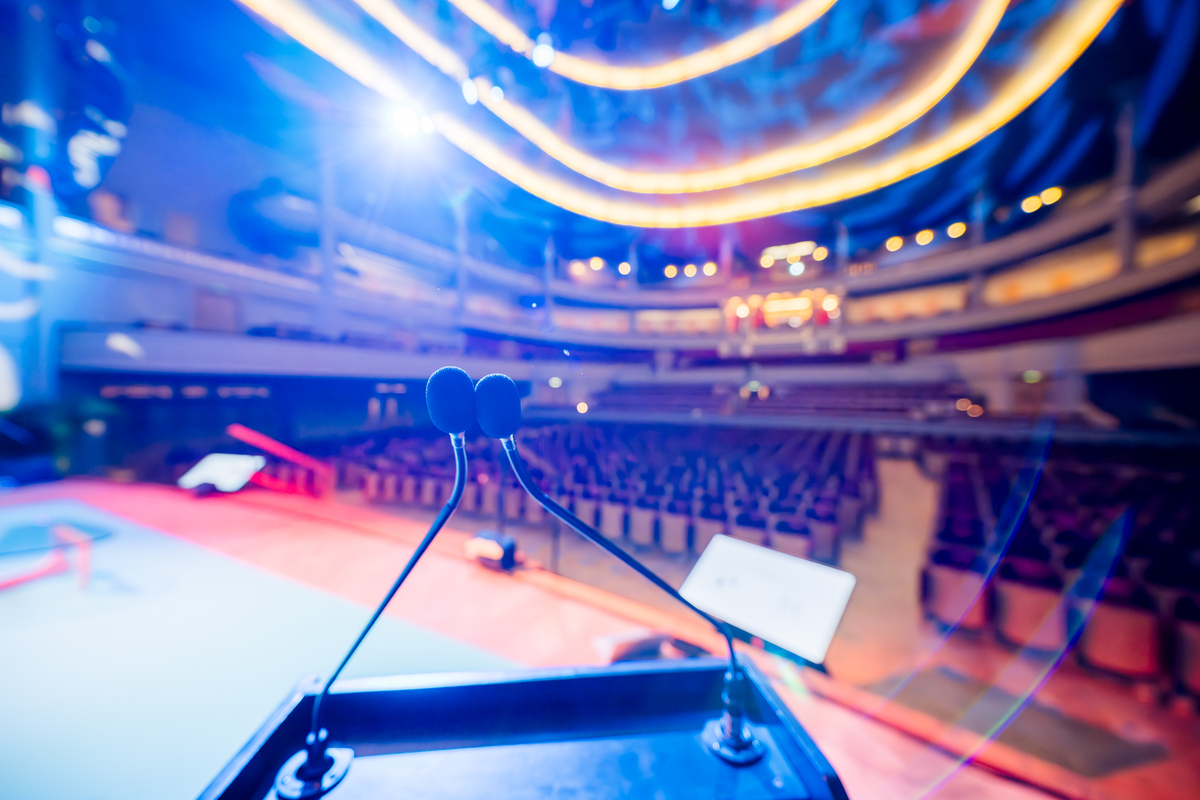
The height of the microphone.
How their voice carries in the room.
The rhythm of the slides.
The light that supports them… or distracts them.
This is what rehearsals are for: taking ownership of the space.
Visualizing movements. Testing delivery.
And getting comfortable in an environment that is often very different from the one they know.
This time is not a luxury. It’s a reference point.
Testing means gaining certainty
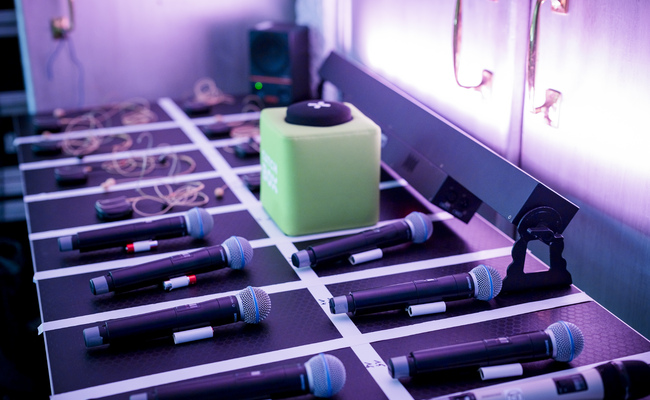
Testing a microphone.
Running through the slides.
Reworking a transition.
It’s not about questioning the content. It’s about supporting it.
It’s not about chasing perfection. It’s about getting it right.
It’s about making each moment feel natural and preparing a stable ground.
A ground on which the speaker can move forward without having to manage a thousand micro-adjustments at once.
Rehearsals remove unknowns. They turn them into reference points. Doubt into confidence.
Rehearsal as invisible support
The height of the microphone. The moment a slide appears. The silence just before an important sentence.
These details may seem minor. But for the person speaking, they matter deeply.
When these elements have been tested carefully, the body knows. It settles more quickly. Breathing finds its place.
The speaker can then focus on what truly matters:
their voice,
their words,
their intention.
Synchronizing before going live
Rehearsals also allow the technical team to notice all the small details that will make a difference during the live moment.
The way the speaker moves.
Their pace.
The silences.
The key moments of the flow.
This time allows them to understand the person, not just the content. To grasp how they function, how they breathe, how they move forward.
This is how synchronization is built. Not in reaction. But in anticipation.
When technology stops taking up mental space
Speaking doesn’t only require intellectual preparation. It also engages the body, emotions, and energy.
Every unanswered question takes up space in the speaker’s mind.
On the contrary, when tests have been done, when rehearsals have confirmed that everything holds together, mental space opens up.
Technology becomes support. Not a concern.
The stage is visible. Confidence is built beforehand.
On the day, everything seems simple. But that apparent simplicity
is the result of precise, attentive, behind-the-scenes work.
A speech happens on stage. But it is secured long before.
In those moments the audience never sees—where things are adjusted, listened to, repeated, so that, when the time comes, the speaker can simply do what they came to do: speak.
Written by Julie Verstappen, event organiser for over 20 years.
After years of designing and coordinating a wide range of projects, from adaptive sports to the training and education sector, I came to understand that success is not driven solely by technical or logistical precision. It is built on a more discreet balance: clear objectives, a solid organisational framework, and genuine attention to what is experienced by those who carry the project.
Through these articles, I share reflections drawn from real-world experience to help organisers turn their ideas into well-crafted, controlled, and deeply human experiences.